China at 4.5%: Export Strength Against a Property Slump
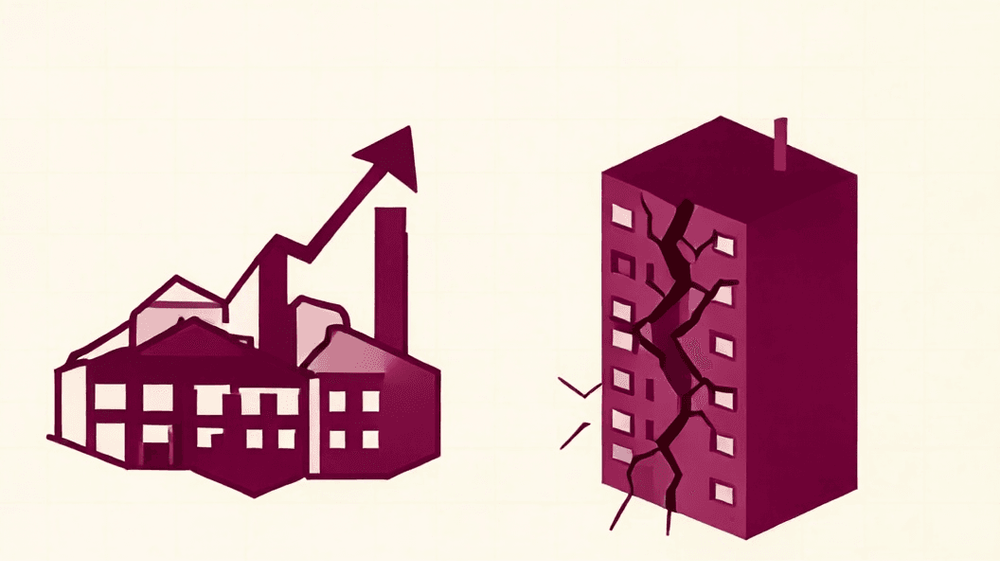
China's real GDP grew by 4.5 percent year on year in the third quarter of 2026, according to the China National Bureau of Statistics release on October 19, 2026. This figure represents a slight acceleration from the 4.3 percent growth recorded in the second quarter. When examining the first three quarters of the year, growth was 4.6 percent. This trajectory suggests a period of moderate expansion, yet the composition of this growth reveals a profound divergence between industrial production and domestic consumption.
The dual-speed economy: Exports versus domestic demand
The current economic terrain is defined by a two-speed structure. On one side, the export sector and high-tech manufacturing are providing the momentum required to maintain positive GDP growth. On the other side, domestic-oriented sectors, particularly real estate and retail, are experiencing significant contraction. This divergence suggests that growth is being driven by external demand rather than internal consumption or investment within the Chinese economy.
Evidence of this external strength is found in the export data. According to the China National Bureau of Statistics report from October 19, 2026, exports of goods in the first three quarters grew by 16.4 percent in nominal terms. This momentum was particularly pronounced in September, when exports surged by 29.6 percent. This surge in trade volume aligns with a 5.5 percent increase in industrial output for the month of September.
High-tech manufacturing appears to be a primary driver of this export-led growth. Data for the first three quarters shows that high-tech manufacturing grew by 14.3 percent. This indicates that the industrial expansion is heavily weighted toward technologically advanced goods, which are often prioritized for global markets. The ability of these sectors to maintain high growth rates is what has prevented the overall GDP from falling despite the downturn in traditional domestic sectors.
| Economic Indicator (Growth Y/Y) | First Three Quarters 2026 | September 2026 (Q3 for GDP) |
|---|---|---|
| Real GDP Growth | 4.6% | 4.5% (Q3) |
| Industrial Output | - | +5.5% |
| Exports (Nominal) | +16.4% | +29.6% |
| Fixed-Asset Investment | -7.2% | - |
| Real Estate Dev. Investment | -20.6% | - |
The decoupling of high-tech manufacturing growth (+14.3%) from domestic retail sales (+1.1%) highlights a growing reliance on external demand to sustain national growth targets.
Key Insight
The real estate contraction and investment drag
The most significant weight on the domestic economy is the real estate sector. The decline in real estate development investment is substantial, falling by 20.6 percent over the first three quarters of 2026. This downturn is a major component of the broader decline in fixed-asset investment, which fell by 7.2 percent during the same period. The relationship between these two figures suggests that the contraction in the property sector is the primary reason why overall investment growth remains in negative territory.
The downturn in the property market is visible not only in investment but also in sales activity. Data indicates that the floor space of newly built commercial buildings sold decreased by 13.2 percent, while the sales value of such buildings declined by 13.9 percent. This combination of falling investment and falling sales suggests a structural shift in the real estate market, where both the supply-side investment and the demand-side purchase activity are retreating simultaneously.
One reading of this data is that the real estate sector's decline is creating a persistent drag on domestic capital formation. When real estate investment falls, it typically reduces the demand for construction, materials, and related services, which in turn affects the broader industrial and service sectors. This creates a feedback loop where the lack of property demand contributes to the wider stagnation in domestic economic activity.
The consumption paradox and labor market trends
Despite the high growth in manufacturing and exports, consumer spending has remained remarkably sluggish. Retail sales of consumer goods grew by only 1.1 percent during the first three quarters of 2026. While total retail sales of goods and services saw a slightly higher growth of 2.6 percent, the modest figures for consumer goods suggest that households are not increasing their spending at a rate that matches the growth of the industrial sectors.
The labor market reflects this lack of consumer momentum. The urban surveyed unemployment rate has averaged 5.2 percent throughout the first three quarters of 2026 and remained at 5.2 percent in September. While a 5.2 percent unemployment rate might appear stable, its persistence alongside weak retail sales suggests that household confidence may be constrained. If consumers are hesitant to spend, it typically indicates that they are prioritizing saving or paying down debt, often due to uncertainty about income or the value of their primary assets, such as residential property.
There is a potential disconnect between production and consumption. While high-tech manufacturing is growing at 14.3 percent, much of this production may be directed toward international markets, though the release does not break this down. This means that the economic activity generated by these high-growth sectors is not necessarily trickling down into the domestic retail market in a way that stimulates internal consumption. Instead, the economy is increasingly reliant on the ability to sell products abroad to maintain its growth trajectory.
Structural divergence and the risks of export reliance
The divergence between the 4.5 percent GDP growth and the domestic contraction creates a highly specialized economic structure. In this model, the "growth engine" is located in the external sector, specifically in high-tech goods that are in demand globally. This makes the national economy increasingly sensitive to the external environment. One reading is that the 4.5 percent growth figure is fragile, as it depends on a specific set of conditions: high global demand for technology and favorable trade environments.
This reliance on exports introduces specific vulnerabilities. The thesis of a two-speed economy implies that any disruption to the export mechanism could have an immediate and severe impact on the total GDP. Two specific risks are prominent in this scenario: the potential for increased tariffs from trading partners and the continued tightening of control over high-tech supply chains, such as semiconductor components. If export growth were to slow, the domestic economy, already weakened by the real estate slump, may not have the internal demand required to sustain the current growth rates.
Another way to view this situation is to consider the potential for a "de-coupling" of economic performance from domestic stability. If the high-tech export sector continues to thrive while the domestic property and retail sectors continue to contract, the economy may see continued growth in aggregate numbers even as the standard of living or consumer confidence for the domestic population remains stagnant. This would represent a structural shift toward an export-oriented, technology-led model that is less reliant on the traditional property-driven investment cycle.
If export growth slows due to trade barriers, the domestic economy may lack the internal demand to offset the loss, leading to a potential drop in aggregate GDP.
Watch For
Strategic indicators for policymakers and investors
For those analyzing the trajectory of this economy, several specific indicators will be critical in determining whether the two-speed model is sustainable or if the domestic drag will eventually overwhelm the export engine. Decision-makers should monitor the following areas:
- Export Volatility: A deceleration from September's 29.6 percent year-on-year export growth or a trend of declining nominal export values in the coming months would suggest that the external engine is losing steam.
- Real Estate Recovery: Whether the 20.6 percent decline in real estate development investment begins to stabilize or further accelerates. A stabilization would be necessary to prevent further drag on fixed-asset investment.
- Retail Sales Growth: A significant rise in the 1.1 percent growth rate of consumer goods would indicate that the manufacturing-led growth is finally translating into domestic consumption.
- Unemployment and Wage Trends: Sustained unemployment at or above 5.2 percent, combined with weak retail sales, will indicate continued household caution.
For investors, the divergence suggests a bifurcated strategy. The high-tech manufacturing sector shows significant momentum, but the property and broader domestic investment sectors remain high-risk areas. For policymakers, the challenge lies in whether they can transition from an investment-led model to a consumption-led model, or if the current reliance on external demand is an acceptable long-term structural choice despite the associated trade risks.
Sources: english.www.gov.cn.