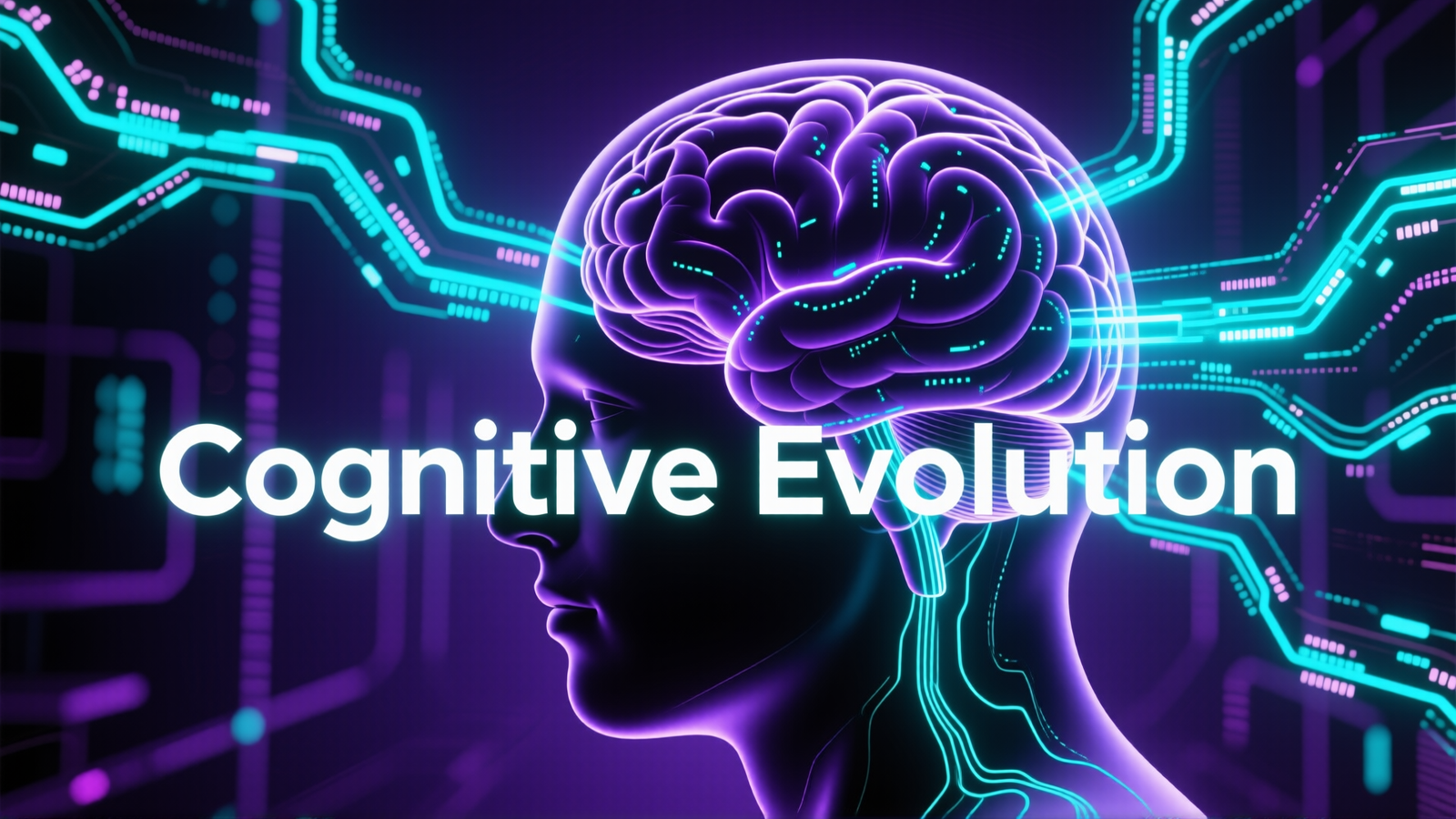

Cognitive Evolution: How AI is Reshaping Human Thought
Executive Summary
As we navigate through 2026, the intersection of artificial intelligence and human cognition has moved beyond mere tool usage into a profound phase of cognitive evolution. This article explores how AI is fundamentally reshaping human thought processes, altering our memory retention, problem-solving strategies, and creative capacities. By analyzing recent industry trends, neuroscientific insights, and real-world case studies, we uncover the symbiotic relationship developing between mind and machine.
The executive takeaway is clear: adapting to this cognitive shift is not just about learning new software, but about rewiring our approach to knowledge and intelligence itself.
As AI systems become more integrated into our daily cognitive tasks, business leaders, educators, and individuals must proactively manage this transition to maximize augmentation while mitigating the risks of cognitive outsourcing.
1. The Shifting Paradigm of Human Memory
Historically, human memory has been the primary repository for information. From oral traditions to the printing press, our methods of storing knowledge have evolved, but the brain remained the central hub. However, with the ubiquitous integration of AI assistants and externalized, instantly accessible knowledge bases, our cognitive architecture is rapidly adapting. We are transitioning from a storage-based memory system to an index-based memory system.
The “Google Effect” Amplified by Generative AI
Neuroscientific studies published in early 2026 indicate that individuals are increasingly remembering where and how to find information rather than the information itself. AI acts as an extended cognitive cortex. While some critics argue this degrades our mental faculties, leading to a shallowing of knowledge, cognitive scientists suggest a more optimistic view. This offloading frees up neural resources for higher-order processing, such as critical thinking, complex synthesis, and cross-disciplinary innovation.
- Working Memory Offloading: Routine cognitive tasks, such as scheduling, basic coding, and preliminary research, are outsourced to AI, significantly reducing daily cognitive load.
- Enhanced Focus and Flow: With mundane details managed by AI, humans can sustain deeper states of flow, focusing on the nuanced, creative aspects of their work that machines cannot replicate.
- Transactive Memory Systems: We are treating AI as a reliable partner in a transactive memory system, where the responsibility for remembering is shared between the human and the digital entity.
2. AI as a Collaborative Thought Partner
The conceptualization of AI has shifted dramatically from a static “search engine” to a dynamic “thought partner.” In creative, scientific, and analytical fields, AI is utilized for rapid ideation, hypothesis testing, and exploring vast possibility spaces.
Case Study: Architectural Design Firm NeoConstruct
In a comprehensive 2026 case study of NeoConstruct, a leading architectural firm, designers utilized advanced generative AI not merely to render 3D models, but to actively explore counterintuitive design spaces. By inputting strict structural, environmental, and material constraints and prompting the AI to generate unconventional solutions, the architects reported a 40% increase in novel design implementations. The AI did not replace human creativity; rather, it served as a powerful catalyst, pushing human designers out of entrenched cognitive ruts and inspiring forms that would have been inconceivable a decade ago.
The Socratic Machine
Furthermore, AI is increasingly being used as a sounding board. By prompting AI to play the role of a critic or a devil’s advocate, professionals can stress-test their arguments and strategies. This iterative dialogue enhances the rigor of human thought, ensuring that blind spots are identified and addressed early in the decision-making process.
3. The Impact on Decision-Making and Problem Solving
AI’s unparalleled ability to process vast, unstructured datasets and identify hidden patterns is fundamentally altering how humans approach complex problem-solving. We are rapidly moving towards a model of AI-augmented decision-making across all sectors.
| Cognitive Skill | Pre-AI Era (Traditional) | AI-Augmented Era (2026) |
|---|---|---|
| Data Analysis | Manual computation, basic statistical modeling, and heavy reliance on limited samples. | AI-driven predictive analytics, real-time pattern recognition across massive datasets. |
| Hypothesis Generation | Based primarily on human intuition, past experience, and limited observation. | AI-suggested correlations leading to novel, data-backed hypotheses. |
| Risk Assessment | Subjective evaluation often prone to cognitive biases and emotional influence. | Algorithmic risk modeling balancing human intuition with objective probability. |
| Strategic Planning | Linear forecasting based on historical trends. | Dynamic scenario planning and simulation using complex AI models. |
This shift requires humans to elevate their role from data processors to strategic evaluators. The value now lies in determining which problems are worth solving and interpreting the ethical and practical implications of the AI’s proposed solutions.
4. The Rise of “Prompt Thinking” and Algorithmic Literacy
A critical new cognitive skill has emerged as a cornerstone of modern literacy: Prompt Thinking. This involves the ability to articulate complex, multifaceted problems into precise, structured queries that AI can process effectively. It requires a deep understanding of logic, semantics, context framing, and the underlying architecture of large language models.
Educational institutions in 2026 are already radically adapting their curricula to teach this skill. They recognize that the ability to ask the right questions, iterate on prompts, and guide an AI towards a desired outcome is now exponentially more valuable than rote memorization.
Algorithmic literacy, understanding how AI systems arrive at their conclusions and recognizing their limitations, is becoming as fundamental as reading and writing.
5. Ethical and Psychological Considerations: The Shadow Side of Augmentation
While the cognitive evolution spurred by AI offers immense, transformative benefits, it also presents significant psychological and ethical challenges that society must proactively address.
The Risk of Cognitive Atrophy
If we over-rely on AI for analytical thinking, navigation, and basic problem-solving, there is a tangible risk of cognitive atrophy in those specific domains. Just as physical muscles weaken without use, mental faculties can degrade if constantly outsourced. Maintaining a healthy balance between AI assistance and independent cognitive exercise is crucial. “Mental fitness” routines, emphasizing deep, uninterrupted reading, unassisted complex problem-solving, and analog hobbies, are becoming popular wellness trends in 2026 to combat this phenomenon.
Algorithmic Bias and Cognitive Distortion
When AI systems continuously feed us information tailored to our existing preferences and biases, it can severely exacerbate confirmation bias and polarize societal discourse. Developing robust cognitive immunity, the ability to critically evaluate AI-generated content, recognize subtle algorithmic biases, and actively seek out dissenting viewpoints, is absolutely essential for maintaining objective reasoning and a healthy democratic society.
The Illusion of Understanding
There is also the danger of the “illusion of understanding.” When an AI provides a perfectly articulated answer, a human might mistake the AI’s competence for their own comprehension. True cognitive evolution requires humans to deeply engage with the AI’s output, questioning its premises and integrating the knowledge into their own mental models, rather than passively accepting it.
Conclusion: Embracing the Symbiosis
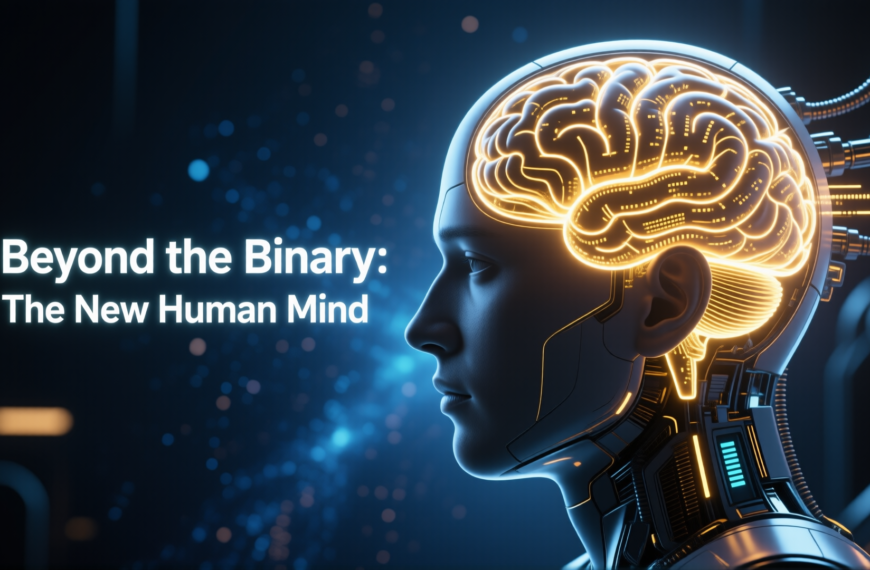
The cognitive evolution driven by Artificial Intelligence is not a zero-sum game where machines win and humans lose. Instead, it is an invitation to a profound symbiosis. By deeply understanding how AI reshapes our thought processes, we can consciously and ethically direct this evolution.
We must actively cultivate the uniquely human traits that remain beyond the reach of algorithms: deep empathy, nuanced moral reasoning, visionary creativity, and the ability to find meaning. Simultaneously, we must leverage AI to exponentially augment our analytical and processing capabilities. The future belongs to those who can seamlessly integrate the computational power of the machine with the profound depth, intuition, and ethical grounding of the human mind. This is not the end of human thought; it is its most exciting new chapter.
References and Industry Insights (2026)
- Global Cognitive Science Consortium. (2026). The Impact of Generative AI on Human Memory Structures and Transactive Systems.
- Institute for Future Work. (2025). AI-Augmented Decision Making in the Corporate Sector: A Paradigm Shift.
- Journal of Applied Neurotechnology. (2026). Prompt Thinking: The New Core Competency for the 21st Century Knowledge Worker.
- World Economic Forum. (2026). Algorithmic Literacy and Cognitive Immunity in the Age of Ubiquitous AI.

 By
By
 By
By