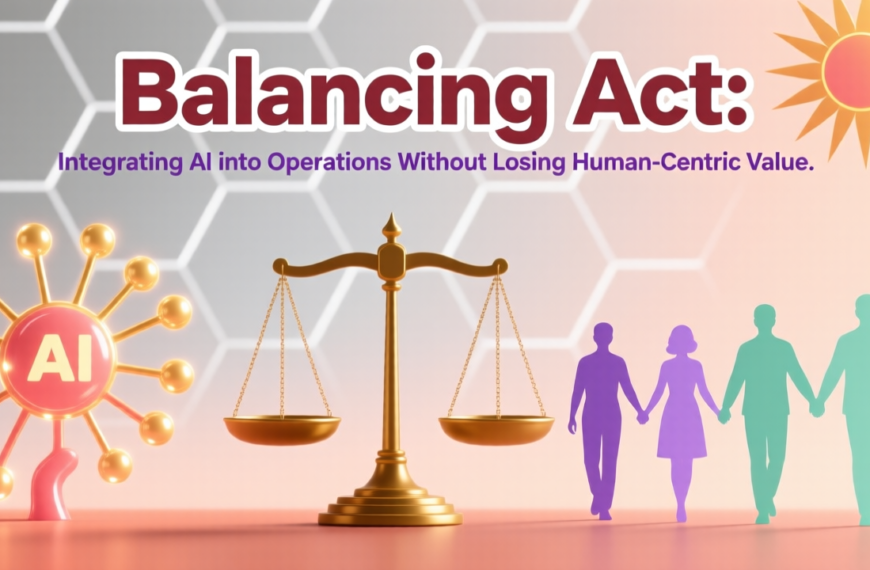
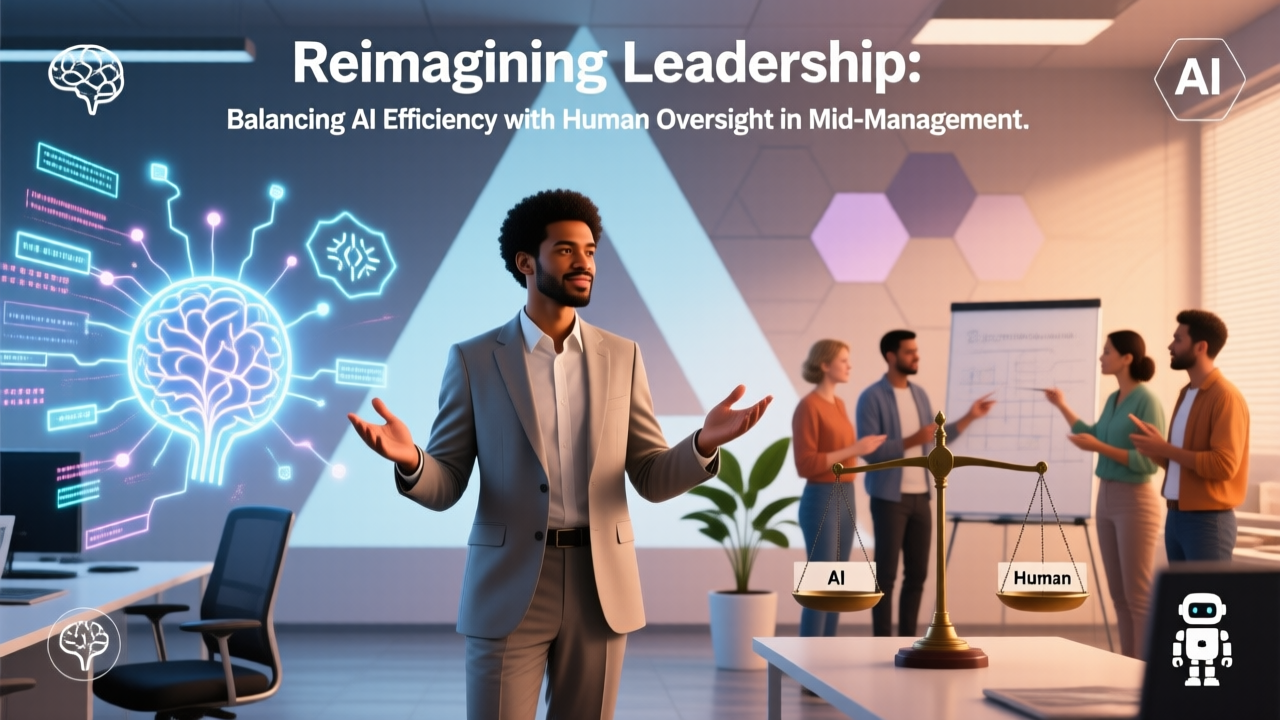

Imagine a world where AI handles routine tasks, freeing leaders to focus on strategy, empathy, and innovation. Yet, this vision hinges on a delicate balance: leveraging AI’s efficiency without sacrificing the human judgment that defines leadership. As AI reshapes industries, mid-level managers face a pivotal question: How can we integrate AI tools without losing the human touch that drives trust, creativity, and ethical decision-making?
Executive Summary
- AI’s Dual Role: Automating tasks while amplifying human potential through strategic oversight.
- Legal and Ethical Risks: From AI-generated legal errors to deepfake controversies, accountability remains a critical concern.
- Corporate Restructuring: Companies like Snap and Atlassian are cutting jobs, signaling a shift toward AI-driven efficiency.
- Human-AI Collaboration: Hybrid workflows outperform fully autonomous systems by up to 69% in high-stakes domains.
- Future-Proof Leadership: Mid-level managers must master AI tools while upholding ethical standards and human-centric values.
Context: The AI Revolution in Leadership
The rise of AI is not just a technological shift – it’s a cultural and operational transformation. Mid-level managers, often the bridge between strategy and execution, now face a new challenge: integrating AI into workflows without compromising the human elements that define leadership. This tension is evident in two stark examples from recent research.
The Nebraska Supreme Court Case: A Cautionary Tale
In 2026, an attorney was suspended for using AI-generated legal briefs containing 57 defective citations, including 20 hallucinations. This case underscores a critical lesson: AI tools are only as reliable as the human oversight guiding them. For mid-level managers, this means implementing rigorous validation processes for AI outputs, especially in high-stakes domains like law, healthcare, or finance.
Snap’s AI-Driven Restructuring: Efficiency at a Cost
Snap’s decision to cut 1,000 jobs and replace 65% of new code with AI highlights the efficiency gains possible through automation. However, this move also raises questions about workforce displacement and the need for reskilling. Mid-level managers must navigate this balance – using AI to optimize operations while investing in upskilling teams to adapt to new roles.
Insight: The Human-AI Collaboration Framework
Research from Stanford and Carnegie Mellon reveals that hybrid human-AI workflows outperform fully autonomous systems by up to 69% in complex tasks. This is not about replacing humans but augmenting them. The key lies in defining clear roles: AI handles data analysis, pattern recognition, and routine tasks, while humans focus on judgment, ethics, and creative problem-solving.
Case Study: The U.S. Air Force’s WarMatrix
The U.S. Air Force’s WarMatrix system, which uses AI for real-time wargaming, exemplifies this balance. AI generates scenarios and strategies, but human officers retain final decision-making authority. This model ensures that AI enhances strategic thinking without replacing it, a principle mid-level managers can apply in their teams.
Framework: The Sim-to-Real Gap
As AI systems like NVIDIA’s Ising models improve error correction and decoding accuracy, the “sim-to-real gap” – the discrepancy between virtual training and real-world performance – remains a challenge. Mid-level managers must ensure that AI tools are tested in real-world scenarios before full deployment, using frameworks like the Stanford AI Index to track progress and risks.
Depth: Navigating Ethical and Legal Challenges
AI’s integration into leadership roles brings ethical and legal complexities. From AI-generated deepfakes to biased algorithms, mid-level managers must proactively address these issues.
Legal Accountability: The Nebraska Case Revisited
The Nebraska attorney’s suspension highlights the need for clear policies on AI use. Mid-level managers should establish guidelines for AI validation, including peer reviews, audit trails, and mandatory human oversight for critical decisions. This ensures accountability and reduces the risk of AI-driven errors.
Ethical AI Governance: The Anthropic Example
Anthropic’s refusal to work with the Pentagon on AI-powered military systems underscores the importance of ethical governance. Mid-level managers must advocate for AI tools that align with organizational values, even if it means rejecting lucrative opportunities that compromise ethics.
Application: Practical Strategies for Mid-Level Leaders
Here are actionable steps for mid-level managers to integrate AI responsibly:
1. Define AI’s Role Clearly
Use AI for data-driven tasks (e.g., analytics, scheduling) and reserve judgment-heavy decisions for humans. For example, AI can flag potential risks in a project, but the final call should rest with the manager.
2. Invest in Human-AI Training
As seen in Debenhams’ AI Skills Academy, upskilling teams in AI literacy is crucial. Managers should prioritize training programs that teach employees to collaborate with AI tools effectively.
3. Implement Ethical Guardrails
Adopt frameworks like the Model Context Protocol (MCP) to ensure AI systems operate transparently. This includes regular audits, bias testing, and clear documentation of AI decision-making processes.
Reflection: The Future of Leadership in the AI Era
The future of leadership is not about choosing between AI and humans but about creating a symbiotic relationship. Mid-level managers who embrace this balance will lead teams that are both efficient and ethically grounded. As AI continues to evolve, the most successful leaders will be those who use technology as a tool for empowerment, not replacement.
Case Study: Meta’s AI Clone of Mark Zuckerberg
Meta’s development of an AI clone of CEO Mark Zuckerberg to advise employees illustrates the potential of AI in leadership. However, it also raises questions about authenticity and trust. Mid-level managers must ensure that AI tools enhance, rather than erode, human relationships within teams.
Frequently Asked Questions
How can mid-level managers ensure AI tools are used ethically?
Implement clear policies for AI validation, conduct regular audits, and prioritize transparency. Use frameworks like the Model Context Protocol (MCP) to ensure AI systems operate within ethical boundaries.
What role should humans play in AI-driven workflows?
Humans should focus on judgment, creativity, and ethical oversight. AI should handle data analysis and routine tasks, ensuring that decisions remain human-centric.
How can managers upskill their teams for AI integration?
Invest in training programs that teach AI literacy, collaboration with AI tools, and ethical AI use. Examples include Debenhams’ AI Skills Academy and Salesforce’s reskilling initiatives.
What are the risks of over-relying on AI?
Over-reliance can lead to errors, bias, and loss of human oversight. It’s crucial to maintain a balance, using AI as a support tool rather than a replacement for human judgment.
How can AI help mid-level managers in decision-making?
AI can provide data-driven insights, identify patterns, and automate routine tasks, allowing managers to focus on strategic and creative aspects of leadership.

 By
By
 By
By